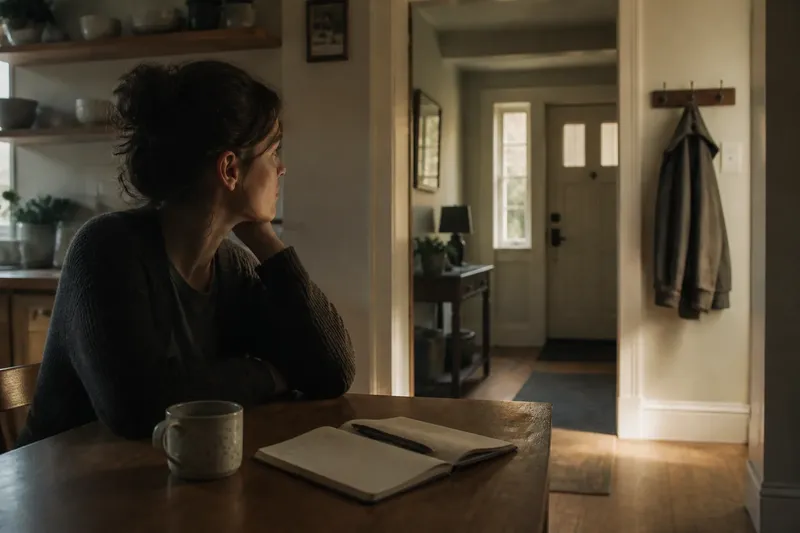
The Reaction Shot Is Not a Simple Answer
A reaction shot can suggest several feelings at once. Learn how timing, performance, framing, and context keep a character’s response open to interpretation.
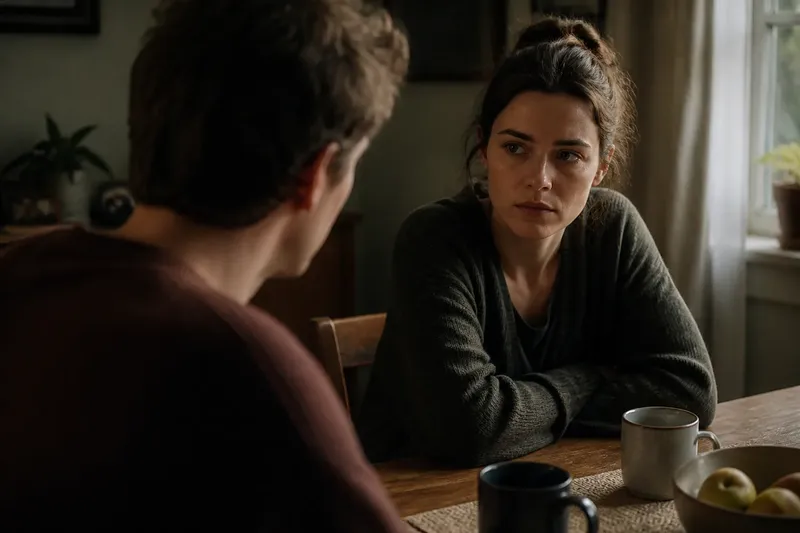
What does a reaction shot tell you when a character’s face does not settle on one clear feeling? In a reaction shot, timing can make a glance, pause, or tightened mouth seem like anger, embarrassment, fear, or an effort to hide any of them. The shot offers evidence, but it does not always supply an answer.
That uncertainty is part of performance, not a flaw in the scene. A face reaches us through what happened just before, what the character chooses to show, and how long the film lets us look. These five ways of reading a reaction shot keep its possible meanings in view.
Separate the face from the cue
A reaction shot often arrives after a line or action that seems to tell us how to read it. Someone delivers a cutting remark; the film cuts to the person across the table. The sequence invites us to connect the face with the remark, but connection is not certainty. The character might be hurt, amused, wary, or simply taking time to answer.
Try watching the face before naming it. Notice whether the eyes move, whether the jaw sets, whether the person looks down or holds the other person’s gaze. These visible details are more precise than a label such as “angry,” yet they still leave room for interpretation. A lowered gaze, for instance, can suggest shame, thought, or a deliberate refusal to engage.
The distinction matters because viewers tend to borrow the scene’s emotional cue. A tense exchange primes us to see tension in every movement that follows. On a quieter viewing, the same movement may read as restraint rather than hostility. The shot has not changed; the pressure placed on it by the surrounding scene has.
Let the delay matter
The interval between an event and a visible response can change what the response seems to mean. A quick smile after a slight may feel defensive or cutting. The same smile, held back until the other person turns away, may seem private, relieved, or unkind. Timing gives a small expression a direction, even when it does not pin down a single emotion.
Editing also decides when the audience gets to see the face. A cut that arrives immediately after a line can make the character seem struck by it. A cut that waits through another person’s movement may imply that the response has been managed, concealed, or delayed for a reason. That implication is an invitation, not proof of what the character feels.
Pay attention to what the character waits through: a silence, a question, a change of subject, or another person’s exit. A reaction that surfaces late may belong to the whole exchange rather than its sharpest line. Reading the delay keeps you from treating every expression as an instant translation.
Read the face in layers
Actors can let incompatible impulses occupy one expression. A person can be pleased and ashamed, frightened and curious, or moved while trying to remain unreadable. In close framing, a small shift around the eyes or mouth may become the scene’s main event. It can register a change without announcing exactly what changed.
This is one reason a restrained performance can feel more open than an overt display. A tear may indicate grief, but a still face that almost breaks can leave the source of the feeling less certain. The character may be suppressing an emotion, resisting another person’s interpretation, or attending to something the audience has not noticed.
Imagine a character receiving an apology in a crowded station. She gives a slight nod, then looks past the apologizing person toward a train board. The action could suggest acceptance, an attempt to end the exchange, or attention pulled elsewhere. Because the nod and glance occur together, neither one has to cancel the other; the scene leaves the viewer weighing both.
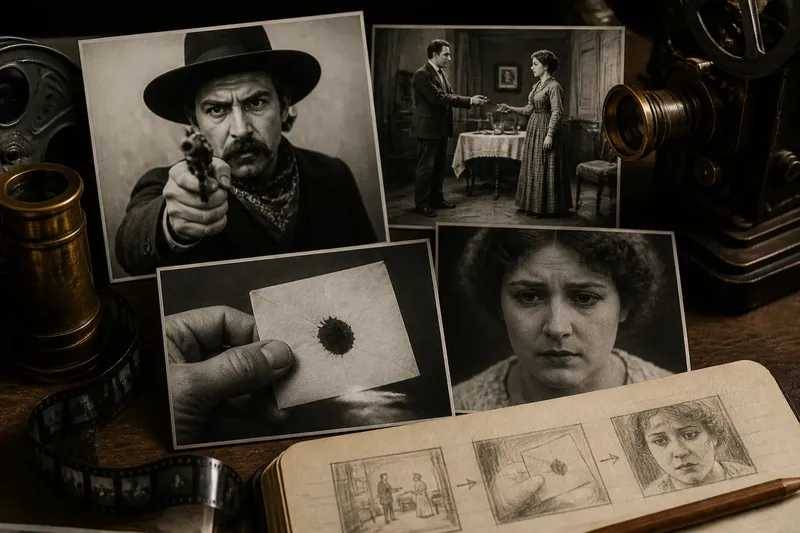
It helps to describe the movement before assigning motive: “she nods and looks away” is an observation, while “she forgives him” is a conclusion. That distinction resembles reading a weathered note: the marks are visible, but the writer’s intent may not be. A careful description preserves the performance’s details without pretending to know more than the scene gives us.
Watch who controls the look
A reaction shot is shaped by more than the actor’s face. Framing determines how much of the body is visible, what surrounds the character, and whether the person appears isolated or in relation to someone else. A tight frame can make a fleeting change feel private and intense. A wider view may show a hand gripping a chair or another person watching, details that complicate the apparent expression.
The camera’s attention can also make a response feel like an answer to the audience. If the film repeatedly cuts to one character after another speaks, viewers may begin to treat that character as the scene’s emotional authority. But the editing pattern may instead show that person being observed, judged, or pressed to reveal something. Ask not only what the character appears to feel, but why the scene has chosen to show the face at that moment.
Background and posture can pull against facial expression. A composed face beside a tightly held glass may suggest an effort to maintain control; in a different context, the same grip could be ordinary. Neither detail carries a fixed meaning by itself. Their value comes from how the scene places them alongside the exchange.
Track the response’s direction
A distinct way to read a reaction shot is to follow where the character’s attention goes. Does the gaze remain on the speaker, shift to a nearby object, or move toward someone else in the room? A change of focus can show that the character is attending to more than the line that prompted the cut, without telling us exactly why.
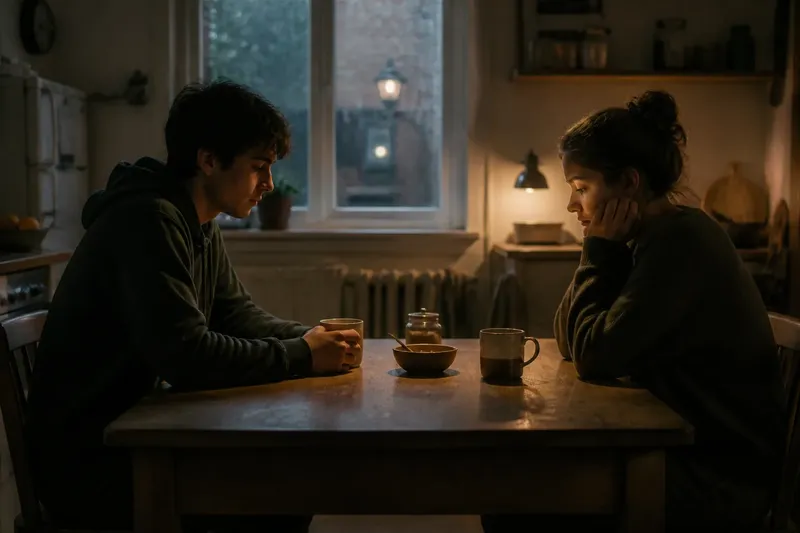
Imagine a character at a kitchen table as a sibling announces a move. The character’s face stays still, but their eyes shift to an untouched cup beside the speaker, then return to the speaker. The observable sequence is a steady face, a glance at the cup, and a return of the gaze. The cup may carry personal significance, or the glance may be incidental; the scene has given us a change in attention, not a settled motive.
Use a short comparison to keep interpretations grounded:
- Visible action: If the gaze stays on the speaker while the mouth tightens, then consider a controlled response; alternatively, keep the reading open if the rest of the scene offers no further cue.
- Visible action: If the character looks down immediately after a line, then note the timing before considering embarrassment; alternatively, describe it simply as a lowered gaze if motive is unsupported.
- Visible action: If the eyes move toward another person in the frame, then consider whether attention has shifted to that person; alternatively, avoid assigning allegiance unless the scene gives a clearer link.
- Visible action: If the character looks toward an object and then back to the speaker, then consider whether the object redirects attention; alternatively, treat the glance as incidental when the scene supplies no connection.
- Visible action: If the face remains still while the hands move, then compare the two signals; alternatively, describe the hand movement without claiming it reveals a hidden emotion.
- Visible action: If the gaze changes only after a pause, then consider whether the delay shapes the response; alternatively, keep the timing separate from any claim about intent.
These comparisons are not a codebook. Like a bookmark placed in a book, a shift in attention helps you locate a moment; it does not tell you what the moment means. If more than one interpretation fits the visible sequence, keep both in view.
What do reaction shots mean?
Does a reaction shot always reveal a character’s true feelings?
No. It shows a selected moment of performance, which may include concealment, uncertainty, or more than one emotion. The character’s visible response is not automatic access to an inner truth.
Why can the same reaction seem different on a rewatch?
Later scenes can change how earlier gestures look, and a viewer may notice details that were easy to miss at first. A held pause that once seemed like anger may come to seem like fear or calculation.
How can editing change the meaning of a reaction?
A cut’s placement links a face to a particular moment, while its duration gives the viewer more or less time to read the expression. Neither choice fixes the meaning, but both shape which interpretations feel available.
What should I notice in an ambiguous performance?
Start with observable details: gaze, posture, expression, and delay. Then compare those details with the scene’s context, leaving room for more than one reading when the evidence supports it.
The next time a reaction shot seems to answer a scene too neatly, wait before naming the feeling. The character may be responding to a line, managing an audience within the story, or trying not to reveal a response at all. A reaction shot’s value often lies in the gap between what the face gives us and what we cannot safely claim it means.