The Eyeline Match: Why a Look Needs Somewhere to Land
An eyeline match links a character’s gaze to a plausible target, helping you read screen direction, attention, and offscreen space with greater confidence.
What does a character see when they look beyond the frame? An eyeline match connects that gaze to a plausible person or object in the next shot. In editing, the connection does more than explain where someone is looking: it can make a room feel continuous, lend a small object importance, or leave you waiting for an answer.
How eyeline matches work
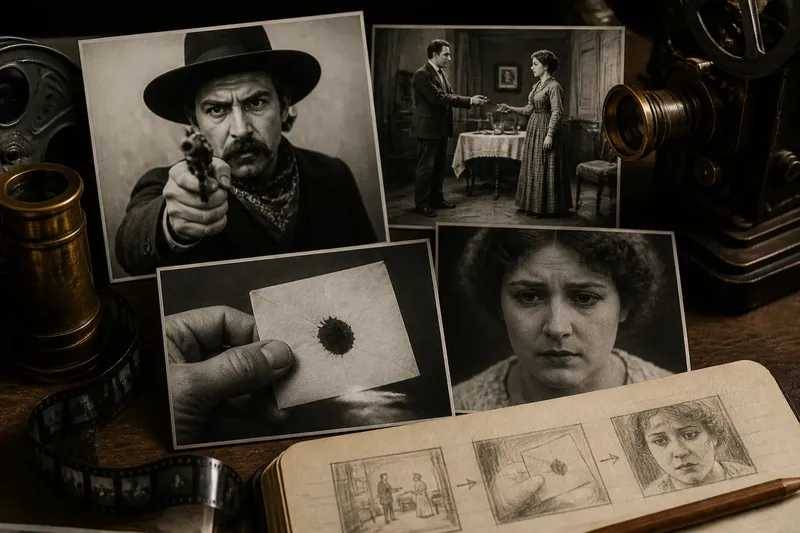
A basic eyeline match pairs two shots: first, a character looking in a particular direction; then, an image of something that seems to occupy the space toward which they look. The second shot does not have to show the character’s literal point of view. It has to feel like a plausible response to the gaze.
That plausibility comes from several cues working together. The eyes suggest where to look; the cut places a new image in that direction; and the framing tells you what matters in it. If a character glances down and the next shot reveals a note on a table, the edit links attention to the note without needing a gesture or explanation.
Think of the cut as a finger pointing across a room. The gesture can direct your attention, but it cannot make the room’s layout clear by itself. The first shot establishes a direction; the next offers a destination. Together, those choices let the viewer infer a spatial and narrative connection.
Read screen direction
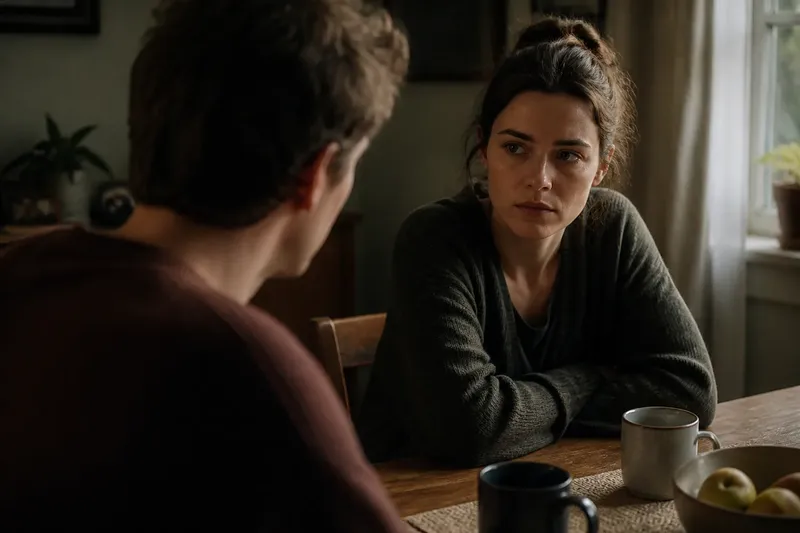
Viewers carry spatial expectations across a cut. If a face looks toward the right edge of the frame, an object on the left side of the next image may feel like a natural counterpart, depending on camera positions and the scene’s established layout. Reverse the apparent direction without a reason, and the object may seem to belong somewhere else.
Screen direction is not a rule that every gaze must point toward one fixed side. Camera placement, subject position, and the geography already established in the scene all affect the match. Ask a narrower question: does the second shot seem to occupy the space the first shot led you to expect?
For example, a character at the left of a wide frame who looks inward may connect neatly to a detail on the right side of the next shot. If the detail appears on the opposite side, the cut may suggest a different spatial relation—or make you pause to reconstruct the room.
Choose the target
The object of a look need not be the most obvious thing in the setting. A shot can include a crowded desk but compose the image so a key, photograph, or stain catches attention. Focus, contrast, position, and movement can distinguish the intended destination from surrounding details.
The duration of the gaze shapes the effect, too. A quick glance followed by a cut can feel casual, while a held look may prompt you to search the frame before the edit supplies an answer. Cutting too early can make the object seem arbitrary; waiting longer may build expectation, especially when the scene offers no other clue about what drew the character’s attention.
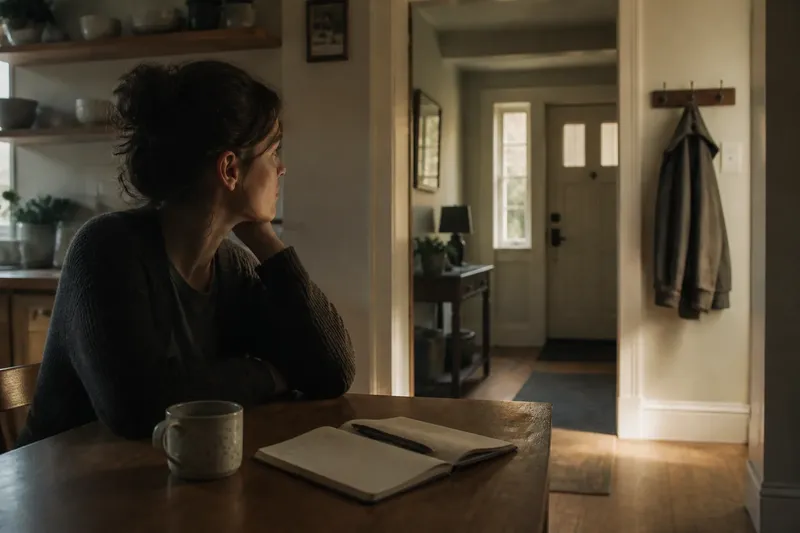
Imagine an invented scene: a character sits at a kitchen table and looks toward the hallway. The next shot shows a coat hanging by the door, shifting slightly in a draft. Because the earlier view established the hallway’s direction and the coat stands apart in the frame, the cut directs attention to it. The movement remains unexplained. The edit connects the gaze to the coat without deciding what the character thinks about it.
What changes the meaning?
Does the target have to appear next?
No. The edit can delay the answer, move to another character, or stay on the person looking. In each case, the gaze invites anticipation rather than immediately identifying a target.
Can a match cross a wide space?
Yes, if the scene gives you enough spatial information to connect the destination to the look. A broad view, a visible landmark, or consistent screen direction can help relate distant parts of a setting.
What if the gaze points the wrong way?
The mismatch may be an error, but it can also make the target feel disconnected or deliberately surprising. Before deciding what the cut communicates, check whether a camera position or movement established earlier in the scene explains the change.
Is the next shot always a point of view?
No. A point-of-view shot presents the scene as seen from the character’s position, while an eyeline match only links a look to a plausible target. The next image may show that target from an angle the character could not literally see.
Match and viewpoint
It helps to separate where a character looks from whose vision the next shot represents. In a point-of-view construction, camera height, distance, or movement may imitate the character’s visual position. An eyeline match can be looser: the edit links attention without asking you to inhabit that exact viewpoint.
This distinction matters when the next image reveals information unavailable to the character. A shot of an object from an elevated angle can still answer the gaze while giving you a clearer view than the character has. The sequence preserves the connection of attention but changes how much you know.
Follow the handoff
To study an eyeline match, pause on the first shot and describe the gaze without guessing its meaning: left, right, up, down, or beyond the frame. Then watch the next shot and identify what in its composition claims to be the target. Finally, ask whether the cut confirms the room’s layout, makes you search, or deliberately unsettles your sense of space.
- Check whether the gaze points left or right; if the next image places its apparent target in the expected direction, read the cut as a spatial connection, but if not, look for a change in camera position before judging the match.
- Check whether the first shot establishes the room’s layout; if it does, use that geography to judge the destination, but if it does not, treat the connection as uncertain rather than assigning a precise location.
- Check what stands out in the second shot; if one object is isolated by focus, contrast, position, or movement, consider it the likely target, but if several compete, read the shot as inviting a search.
- Check how long the character holds the gaze; if the look is brief, expect a quick handoff, but if it is sustained, allow for suspense or a delayed answer instead of assuming the target is obvious.
- Check whether the next shot imitates the character’s camera position; if it does, it may function as a point of view, but if it shows the target from another angle, read it as an eyeline match without literal viewpoint.
- Check whether the next image answers the look; if it does, note what the match makes salient, but if it does not, track the intervening shot as a delay that may preserve anticipation.
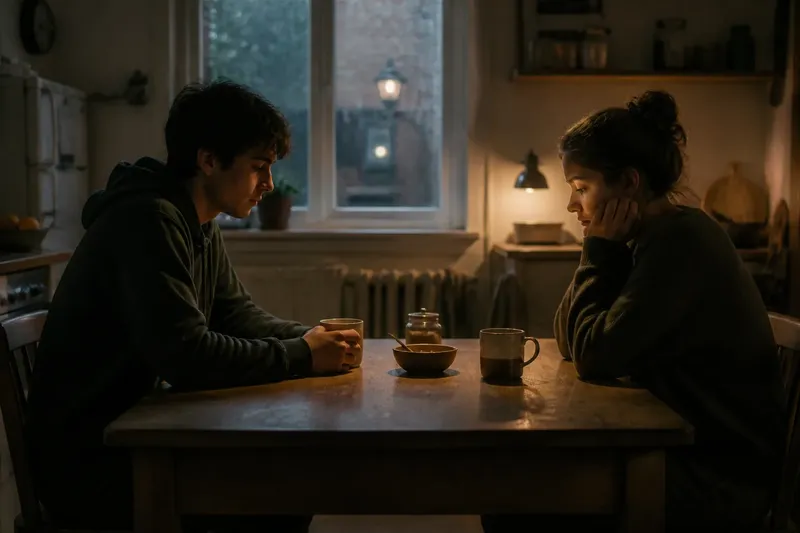
Imagine an invented scene with a clear starting point: a person sits on the left side of a café booth, facing a companion, and glances to the right, toward the window. First, the opening two-shot establishes the window on the right side of the room. Next, a close shot shows the person’s eyes turning toward that side. Then the edit cuts to a rain-streaked window, with a bus passing outside. The established layout and matching direction make the window a plausible target; the bus adds a new detail for the viewer to notice. If the shot instead showed a spoon on the table, the direction would no longer fit the established geography, so the edit would suggest a different connection or leave the viewer to question the cut.
That small handoff is one way editing makes attention visible. When you revisit a scene, track not only what a character sees but how the cut teaches you to look for it. The eyeline match makes the most sense when you can identify both the gaze and the destination—and notice what the edit leaves unresolved.