Live Sound or Added Score: Two Ways to Hold a Quiet Scene
Live sound or added score can guide attention through a quiet scene in different ways; learn what each makes audible and how to choose between them.
When a quiet scene holds your attention, what are you listening for: the room itself, or music shaping what the moment means? Live sound or added score gives a filmmaker two distinct ways to direct a viewer’s ear without making the scene louder. Neither is automatically more honest or more moving. The choice changes what seems present, what stays in the background, and how much emotional interpretation the scene supplies.
Two sources of attention
Diegetic sound belongs to the scene’s world: a radiator ticking, a chair shifting across a floor, traffic beyond a window. The characters could hear it, even if the camera does not show its source. Added score, by contrast, is music placed for the viewer rather than heard by the characters. A sustained note can gather attention around a face or stretch a pause without changing anything in the room.
In practice, the boundary is not always a clean divide. A song may begin on a character’s radio, then continue after the picture leaves it; a score may borrow the texture of a room tone. For appreciation, the useful question is not merely where the sound originates. Ask what the film wants you to notice and how explicitly it wants to guide your response.
The room as a cue
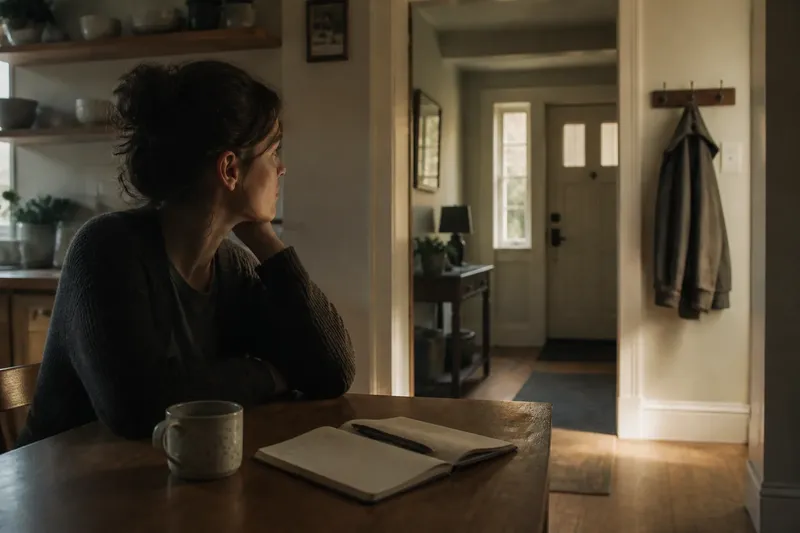
Live sound can make stillness feel inhabited. A person waiting in a kitchen may be quiet, but the refrigerator motor, a distant delivery truck, or a spoon settling in a mug gives the silence texture. These details let attention move among the character, the room, and the unseen world beyond it. The scene can suggest time passing without cutting away or explaining the character’s thoughts.
That texture can also leave emotion unresolved. A floorboard creak may register as ordinary household noise, or make a pause feel exposed, depending on what the viewer brings to it. Because the sound has a plausible source, it can resist turning every gesture into a clear emotional signal. The room does not have to share the character’s mood.
Choosing live sound suits scenes built around observation, restraint, or a strong sense of place. It can be especially effective when a small physical event matters: a character stops stirring, sets down a cup, or listens toward another room. The sound gives the audience a reason to attend to that action while leaving its meaning open.
Music as a frame
Added score works differently. Music can bind separate details into one emotional movement, making a held glance feel tender, uneasy, or expectant. It can also draw attention away from literal noise. A quiet scene with music does not have to announce a character’s feelings; a restrained harmony can simply make the pause feel shaped rather than incidental.
Because score is not usually part of the characters’ environment, it can carry a point of view. It may align the viewer with one person, create distance from a character’s apparent calm, or suggest an undercurrent that no one in the scene can name. A sparse arrangement can do this with little melodic activity. Even a faint musical tone changes the terms of listening: the viewer is invited to hear significance, not just acoustics.
Score is often a good fit when the scene needs continuity across gaps, when the physical environment offers little useful texture, or when the filmmakers want a clear emotional current beneath minimal action. It can also help a scene remain legible when ordinary room sounds would distract from a subtle exchange. The tradeoff is that music may narrow the range of interpretations that live sound would leave open.
What should lead?
Think of sound as a lamp aimed at a particular part of a room: it does not change the furniture, but it changes what catches your eye. Before deciding between live sound and score, identify the scene’s center of attention. Is it the character’s listening, a meaningful object, the space around them, or a feeling the image alone cannot quite hold? Choose the sound approach that supports that center without explaining it twice.
- Follow the scene’s physical action. If a small noise changes what a character does, live sound may make the cause-and-effect relationship clearer.
- Consider how open the emotion should remain. Ambient detail tends to preserve ambiguity; score can give a pause a more directed emotional color.
- Listen for competing information. If footsteps, ventilation, or nearby activity pull attention from the central action, a score may help organize the scene. If those sounds reveal its setting or tension, keep them audible.
- Notice the scene’s point of view. Room sound can keep us close to the shared environment, while music can create a more subjective or reflective frame.
- Ask what changes during the pause. A rising musical line may carry a gradual emotional shift; a single change in room sound may make the same shift feel observed rather than guided.
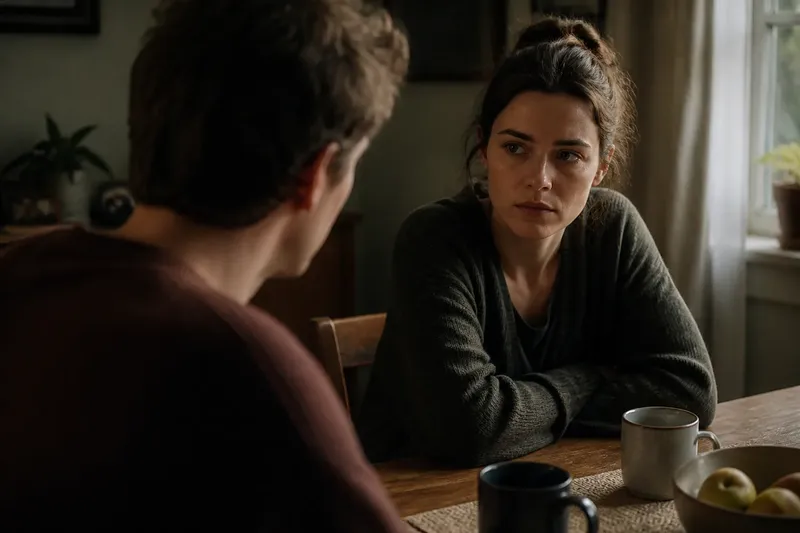
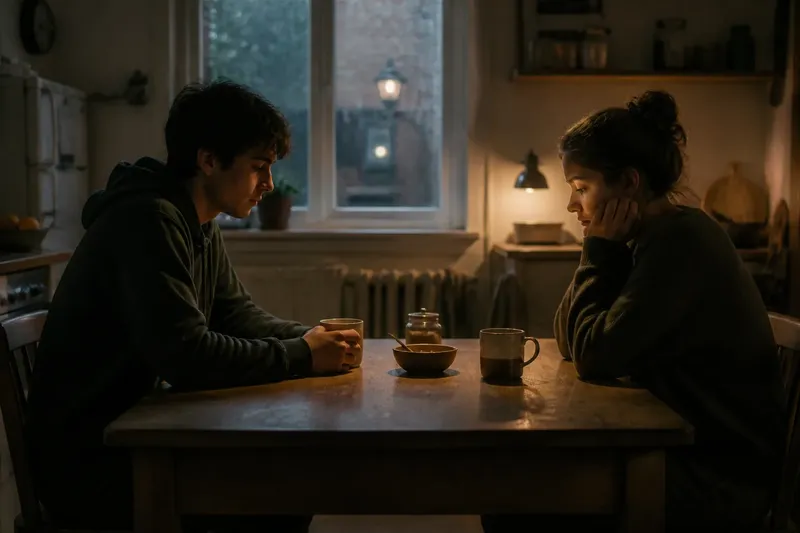
Imagine a scene in which two siblings sit at a table after an argument. If the film keeps the scrape of a chair and the distant plumbing audible, a viewer may concentrate on their awkward attempts to resume an ordinary task. If a quiet score enters instead, the pause may feel like an emotional turning point, even if neither character speaks. The observable difference is where attention settles: on behavior within a shared room, or on the tension held between the siblings.
How does the choice read?
Does live sound make a scene more realistic?
It can make a scene feel connected to a particular space, but realism depends on how the sound is chosen and mixed. A carefully selected room tone may feel more vivid than a mass of unrelated noise, while a stylized score can still suit a grounded scene.
Can music be quiet without taking over?
Yes. A score can stay sparse, sit low in the mix, or enter only at a turning point. Its influence comes not only from loudness but from its timing, tone, and relationship to the images.
What does silence contribute?
Silence can make a viewer attend to breathing, a held movement, or the absence of an expected sound. In cinema, apparent silence is often a deliberate choice about which parts of the soundtrack to withhold, so it can feel as shaped as music.
Can a scene use both approaches?
Yes: room sound can establish a space before score gradually enters, or music can recede until ordinary sounds take the lead. The transition matters because it can signal a shift from shared surroundings toward a more subjective experience.
Choosing without ranking
Live sound and added score are not opposing claims about what cinema should be. One can make the environment active; the other can frame a feeling or bring continuity to a pause. A scene may even use both at different moments, allowing the balance to change as the viewer’s attention changes.
When you watch a quiet scene, listen for the first sound that makes you shift your attention, then notice what follows it. That small sequence often reveals the film’s method: whether it asks you to read meaning in the room, receive a musical cue, or move between the two. Live sound or added score is a useful distinction precisely because it describes an effect, not a rule about which choice matters more.