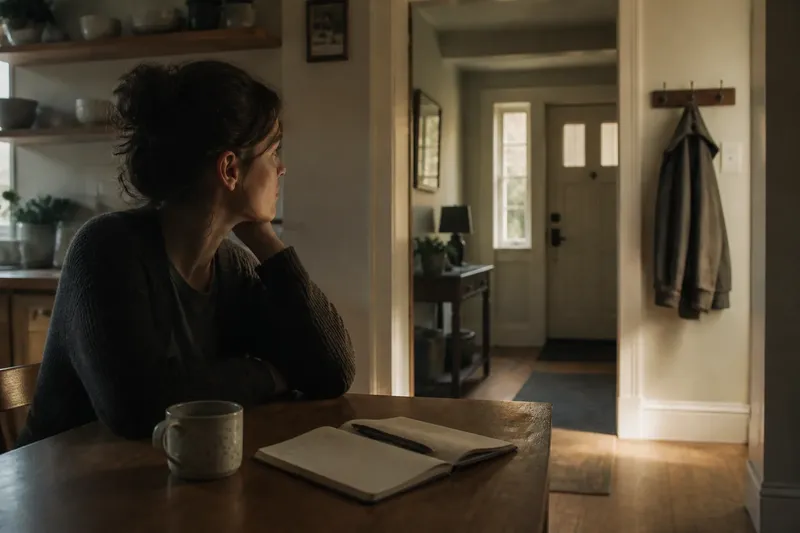
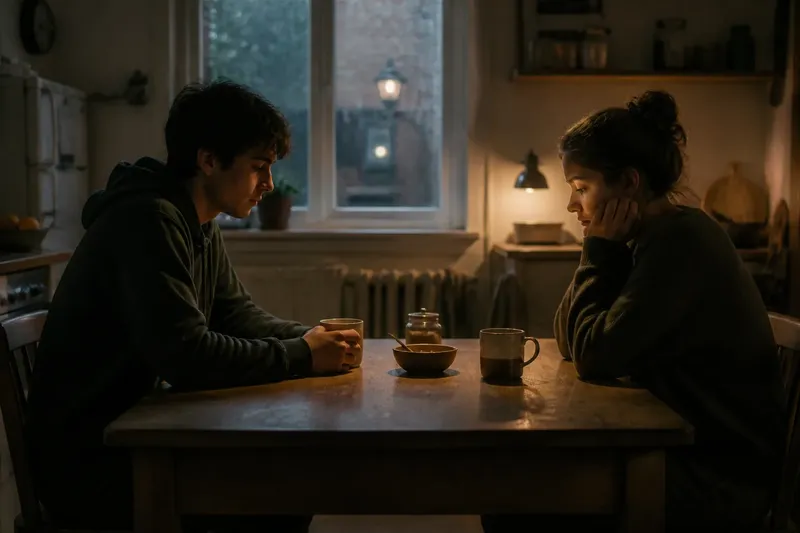
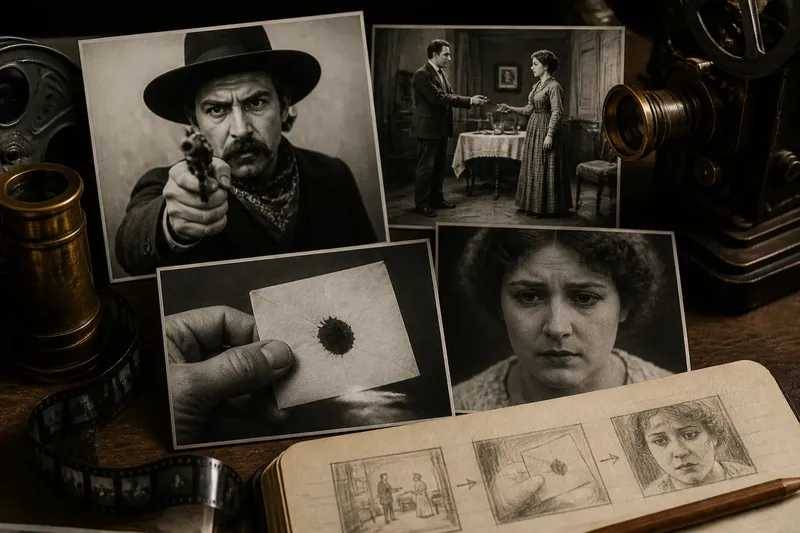
A Rewatch for the Scene’s Changing Distance
A scene rewatch focused on changing camera distance helps you track who holds attention, what the room reveals, and how a scene’s emotional balance shifts.
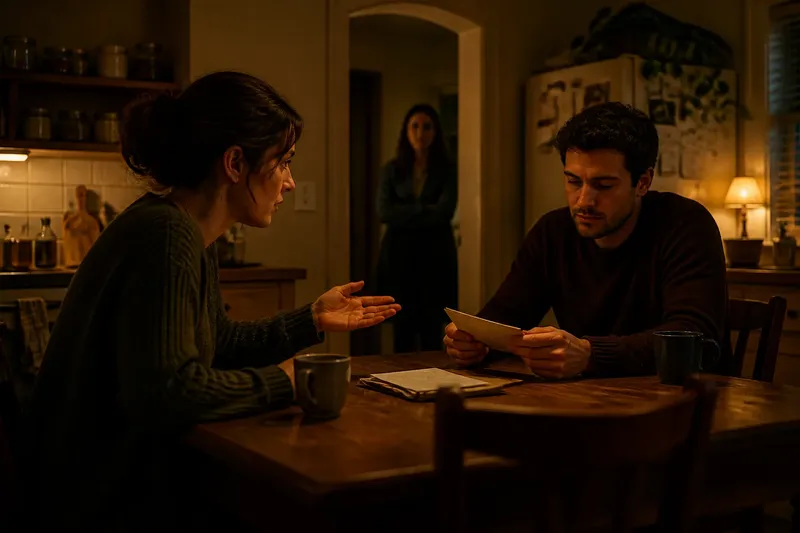
What changes when a scene gives one person the floor, then quietly shifts your attention elsewhere? A scene rewatch focused on camera distance can help you answer that question by tracking who gets visual emphasis and what the surrounding space contributes.
This is not a hunt for a fixed meaning. A tighter view may single out a reaction, but it can also make that reaction harder to interpret; a wider view may clarify who is present without telling you what to feel. For one evening, watch a scene once without pausing, then replay it with a single question in mind: how does the image distribute attention?
Choose a scene
Pick a scene short enough to remember, but long enough to contain a change in who seems to lead the exchange. A group conversation that shifts toward one speaker can work well. So can a scene where someone’s gesture redirects attention, or a cut reveals that another person has been listening all along.
Choose a scene you can replay through a streaming service, disc player, or accessible file. Use a screen large enough to distinguish faces, gestures, and nearby objects. You do not need specialized vocabulary. A scrap of paper with the headings “who draws attention,” “what remains visible,” and “what changes” is sufficient.
Before replaying, decide what you will count as a shift in attention. It might come from a change in framing, a cut to a listener, a movement across the room, or a gesture that redirects the exchange. Record what you can see before deciding what it means.
Watch without pausing
Let the scene run from beginning to end. Take in the acting, sound, and story as you normally would, without trying to explain each choice as it happens. Afterward, write one plain-language impression: perhaps one person seemed to control the exchange, or perhaps attention kept slipping away from the apparent speaker.
Keep that first response for comparison. On the replay, note the order in which the image asks you to look: who is visible, whose action draws the eye, and whether another person or object changes the situation. A sequence might read, “both at table; listener looks away; speaker notices; cut to doorway.”
Write down what remains in the frame as carefully as what becomes prominent. A hand on a cup, an empty chair, or a person near the edge can complicate the apparent focus. The scene may make a speaker easy to see while leaving the listener’s response available only in posture or movement.
Track attention shifts
Look for the scene’s pattern. Does attention stay with one person, move between speakers, or leave the conversation for an object or another part of the room? Does a cut arrive after a gesture, before a reply, or while someone is still speaking? Those choices help describe how the scene organizes its viewers, without assigning a single emotion to each shot.
A shift toward a listener can make a reaction part of the exchange rather than a private response. A return to the speaker may restore the conversation’s apparent center, while a view that includes both people can show how they share—or contest—the space. The meaning depends on what has happened in the scene, not on a universal code.
Think of attention like a flashlight passed around a dark room: the lit area becomes easier to inspect, but the rest does not cease to exist. Cinema can direct your gaze toward a face, a hand, or a doorway while leaving other details active at the edge of your attention.
When the scene changes focus, ask what the new view adds and what it leaves out. Does it reveal a reaction, show who else is listening, or make a previously unnoticed object matter? Does the scene return to its earlier focus, or does the shift persist?
Questions about attention?
How can I tell who controls attention?
Notice who receives the clearest view, whose gestures prompt a cut, and whether other people respond to that person. If these cues point in different directions, record the conflict instead of choosing a single leader.
What should I note outside the main action?
Watch the edges of the frame for listeners, entrances, objects, and people who do not speak. If one of them changes your understanding of the exchange, include that detail in your notes; otherwise, leave it as background.
Does a cut always mark a change in power?
No. A cut can simply make a reaction legible or preserve the rhythm of a conversation. Compare what is visible before and after it, then decide whether the shift changes who seems to guide the scene.
What if attention never moves?
Record that steadiness and check whether the actors, sound, or movement still change the exchange. If they do, the scene may be directing attention through performance rather than through a new view.
Work through a scene
Say you choose an invented scene in which Mara and Leon discuss a letter at a kitchen table. On the first viewing, you think Mara controls the conversation because she speaks for most of it. For the replay, you write down three observations: the opening view includes both people and the letter; Leon stops turning the envelope when Mara asks a question; the next cut gives Leon’s face the clearest view before he answers.
Then you check the ending: Mara stands, but the image stays with Leon and the unopened letter. Your notes now suggest a more mixed arrangement. Mara leads the spoken exchange, while Leon’s pause and the final view make his response—and the letter—central to the scene’s last beat. That is a more specific account than simply calling either person dominant.
Separate cues carefully
Attention can shift alongside a change in acting, dialogue, sound, or movement. Note whether a cut follows a pause, whether a sound draws your eye before the image changes, or whether a gesture makes a previously ordinary object newly noticeable. You do not need to analyze every element; recording the overlap is enough to avoid attributing the whole effect to one choice.
Describe what happens before naming an emotion. “The camera cuts to the listener as the answer stops” is observable; “the listener feels defeated” is an interpretation. You can make that interpretation later, and compare it with other evidence in the scene.
Also notice when the scene holds its focus despite a change in the conversation. If a person becomes hesitant while the image remains on the same view, that contrast may be meaningful. The scene may keep attention steady so the performance carries the change, or it may leave the viewer unsure where to look.
Keep notes practical
Use the following checks to turn observations into decisions. If a cue is unclear, replay that moment once rather than guessing.
- Check the opening view: If one person or object already draws the eye, note it as the starting focus; if the view is shared, record the people and objects included instead.
- Check who prompts the next cut: If a gesture or line is followed by a new view, note the connection; if no clear prompt appears, mark the cut as unexplained rather than assigning a motive.
- Check the listeners: If a listener reacts visibly, include that response in the attention pattern; if no response is legible, keep the note limited to what the speaker does.
- Check the frame edges: If an edge detail changes your understanding, add it to the account; if it does not, treat it as background rather than forcing a meaning.
- Check the sound cue: If a sound draws attention before the image shifts, note sound and image together; if the sound stays steady, describe the visual shift on its own.
- Check the ending: If the scene closes on a new person or object, compare it with the opening focus; if it returns to the same view, note what has changed within that familiar arrangement.
End with a short account of the pattern: where attention begins, what redirects it, and what the final view leaves you considering. Then compare that account with your first impression. If the two differ, keep both; the gap between them can be more revealing than a tidy verdict.
A scene rewatch built around attention works best as a modest inquiry, not a code to crack. Keep the notes tied to visible choices, and when the scene returns to mind, ask one further question: who was present in the image but not yet part of your understanding?